Best Supplements for Mitochondrial Function: Do Lab Results Actually Mean Real Benefits?
A supplement can affect mitochondrial biology without producing a benefit you can actually feel. That distinction is the most important thing to understand before comparing “mitochondrial support” supplements.
A compound may have a legitimate biochemical role. It may influence a signaling pathway. It may raise a blood biomarker. In some cases, researchers may even detect a change in a direct mitochondrial measurement. None of those findings automatically means the supplement improves exercise performance, physical function, mobility, fatigue, or quality of life.
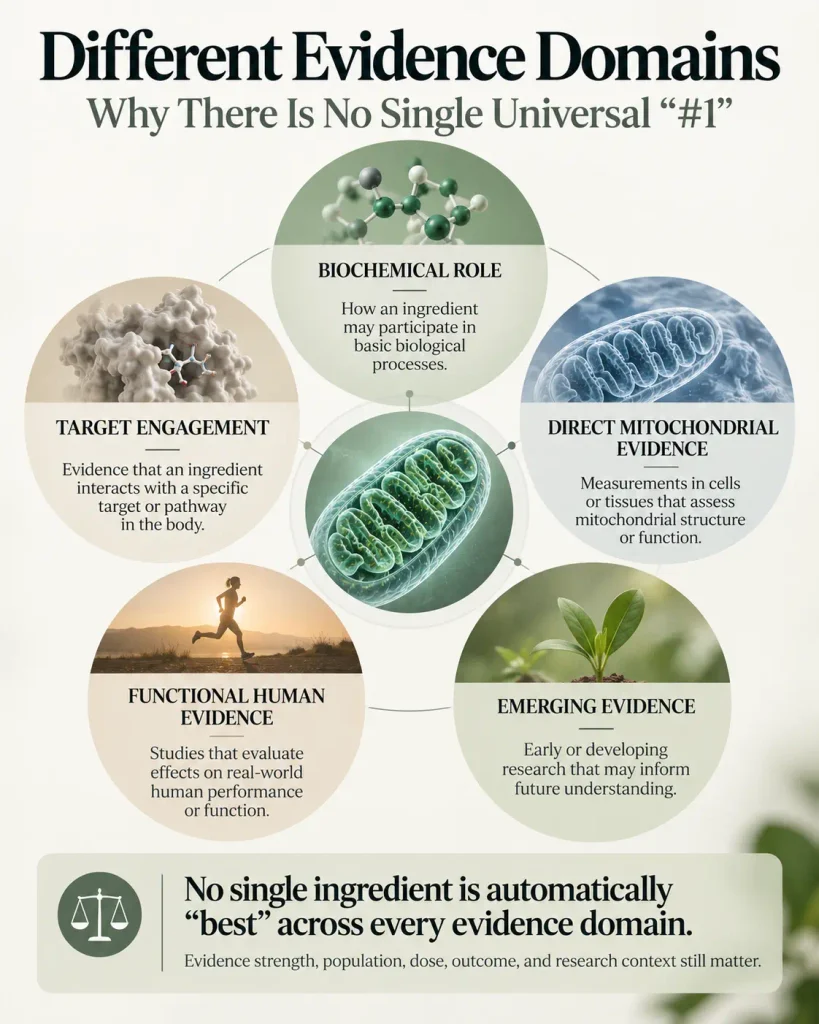
The reverse can also happen. Creatine, for example, has strong human evidence for several functional outcomes even though it is not primarily validated as a mitochondrial-specific supplement. So there is no scientifically defensible universal #1 mitochondrial supplement.
If you are comparing supplements more broadly, our guide to brain health supplements uses the same basic discipline: distinguish plausible ingredients from evidence that matters in people.
Different ingredients lead on different kinds of evidence. CoQ10 is a useful example of strong target engagement with less certain translation into healthy-adult performance. NR and NMN can change NAD-related biology without consistently improving physical function. Urolithin A has compelling mitochondrial-quality biology and human trials, but its broader functional evidence remains emerging. Creatine has comparatively strong human functional evidence without needing a strong “mitochondrial supplement” identity.
That is how this article evaluates the category: what biological role an ingredient has; whether humans show target engagement; whether mitochondria themselves have been measured; whether functional outcomes improve; who was actually studied; how certain the evidence is; and what safety limitations matter. Lab results can be meaningful. They are just not the same thing as real-world benefit.
What Does “Mitochondrial Function” Actually Mean?
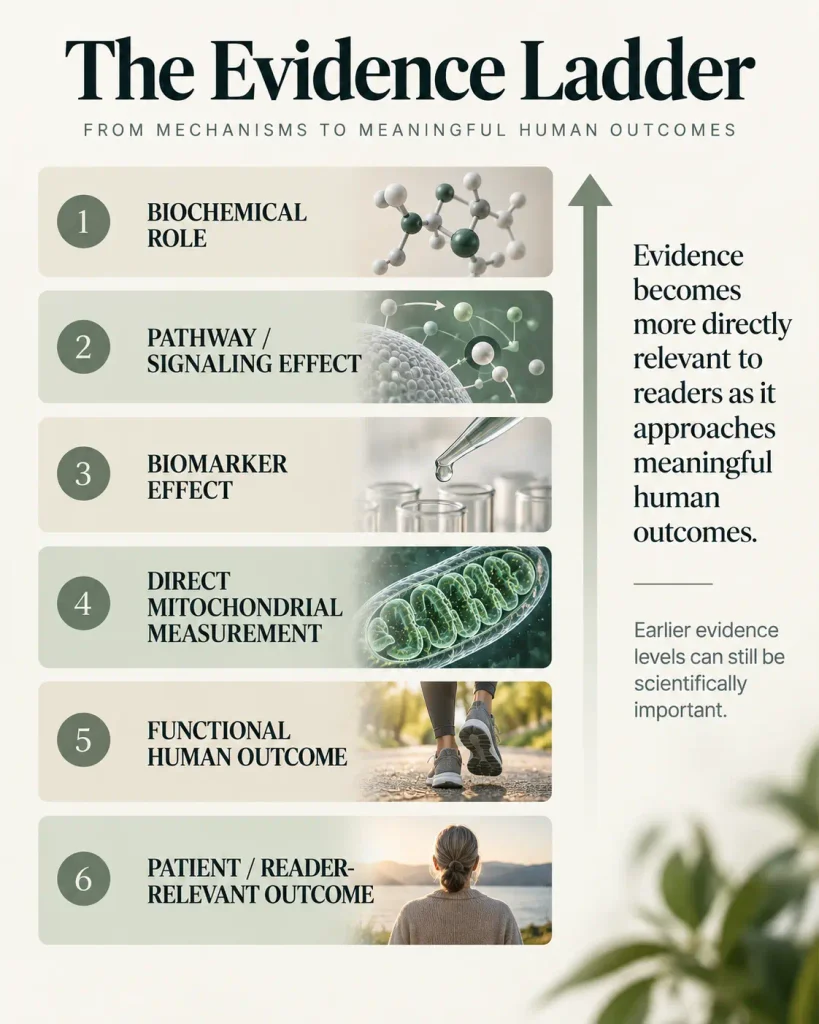
“Mitochondrial function” sounds like one measurable thing. It is not. Mitochondria participate in energy metabolism, cellular signaling, redox biology, substrate use, adaptation to exercise, and the maintenance and turnover of mitochondrial components.
Researchers can therefore study mitochondrial biology at several levels. That creates a problem in supplement marketing: evidence from one level is often presented as if it proves another. It does not.
Biochemical Role Is Not the Same as Supplement Benefit
Some nutrients and compounds have an unquestioned role in normal metabolism. CoQ10 participates in the electron transport chain. Carnitine is involved in transporting long-chain fatty acids into mitochondria. Magnesium is required for normal ATP-related biology. B vitamins serve as metabolic cofactors.
Those facts establish biological importance. They do not establish that giving extra amounts to an adequately nourished person produces an additional benefit. A substance can be necessary for normal physiology without becoming a useful performance or “energy” supplement once normal requirements are already met.
Pathway and Biomarker Changes Are Not Functional Outcomes
One level higher, a supplement may change a signaling pathway or biomarker. NR or NMN may alter NAD-related biomarkers. PQQ may influence a signal associated with mitochondrial biogenesis. An antioxidant compound may change a marker of oxidative stress.
Those findings can be scientifically interesting because they show that the intervention is doing something biologically measurable. But a changed biomarker does not automatically tell you whether a person walks farther, performs better, feels less fatigued, or functions better in daily life. Higher NAD-related markers do not automatically mean “more energy.” A higher PGC-1alpha-related signal does not automatically mean better endurance. A lower oxidative-stress marker does not by itself establish improved mitochondrial function.
Direct Mitochondrial Measurements Are Stronger, but Still Not the Final Question
Direct mitochondrial measurements move closer to the claim. If researchers measure mitochondrial respiration, mitochondrial content, muscle mitochondrial markers, or related tissue-level changes, that can provide stronger evidence that something relevant is changing inside the system of interest.
But even direct mitochondrial evidence is not the final buying question. A supplement can improve a laboratory measure of mitochondrial biology without producing a meaningful improvement in physical function. That does not make the lab result irrelevant. It means the result answers a narrower question.
Functional and Reader-Relevant Outcomes Matter Most for Buying Decisions
For most readers, the endpoint that matters is not whether a pathway moved. It is whether the intervention produced a meaningful human benefit. Depending on the context, that might include better exercise performance, improved strength or muscular function, greater walking capacity, improved exercise tolerance, less clinically meaningful fatigue, better mobility, or another outcome that affects daily life.
A biochemical mechanism can support plausibility. A biomarker can show target engagement. A direct mitochondrial measure can strengthen biological confidence. But functional human outcomes are what most directly answer whether the supplement produces a benefit that matters to the person taking it.
The Evidence Matrix: What Each Supplement Actually Shows
The matrix below is not a ranking. It shows where each ingredient has evidence, where the evidence stops, and how closely the findings connect to outcomes a healthy adult might care about.
| Ingredient | Why it is discussed | Human target engagement | Direct mitochondrial evidence | Functional human evidence | Healthy-adult relevance | Main limitation |
| CoQ10 | Direct role in mitochondrial electron transport | Strong for raising circulating CoQ10 | Moderate / context-dependent | Inconsistent for healthy-adult exercise outcomes | Moderate | Higher blood levels do not reliably translate into better performance or energy |
| NR / NMN | NAD-related metabolism and aging biology | Strong for changing NAD-related biomarkers | Limited to moderate, depending on marker and study | Limited / inconsistent | Emerging | Target engagement is clearer than consistent functional benefit |
| Urolithin A | Mitophagy and mitochondrial-quality biology | Moderate | Promising / emerging human mitochondrial signals | Limited / low-certainty overall | Emerging | Human trial base remains relatively small |
| Creatine | Cellular energy buffering and strong performance evidence | Strong for creatine-related target engagement | Not primarily validated through a mitochondrial-specific claim | Strong in strength, muscle, and high-intensity contexts | Strong, depending on goal | Functional evidence is stronger than its case as a mitochondrial-specific supplement |
| L-carnitine / ALCAR | Fatty-acid transport into mitochondria | Moderate; varies by form and population | Mechanistically direct role; supplement intervention evidence varies | Mixed / population-specific | Limited to moderate | Necessity in physiology does not establish universal benefit from extra supplementation |
| PQQ | Mitochondrial-biogenesis and signaling interest | Moderate molecular target signals | Limited | Limited / not clearly improved in key performance context | Limited | Molecular signaling has not clearly translated into added aerobic-performance benefit |
| Alpha-lipoic acid | Mitochondrial cofactor relevance and redox biology | Moderate | Limited for healthy-adult optimization | Mostly clinical-context evidence | Limited | Much of the evidence comes from metabolic or clinical populations |
| Magnesium | Essential for ATP-related biology and many enzymes | Context-dependent; strongest relevance is deficiency correction | Not a direct mitochondrial-optimization case | Strong for deficiency correction; limited beyond adequacy | Context-dependent | Essential does not mean extra supplementation improves mitochondrial function in replete people |
| B vitamins / niacin | Essential metabolic cofactors | Context-dependent; strongest relevance is deficiency correction | Mostly indirect through normal metabolism | Strong for deficiency correction; limited as an “energy boost” when replete | Context-dependent | Cofactor role is often incorrectly converted into a universal energy claim |
| Resveratrol | Signaling and mitochondrial-interest pathways | Moderate / mixed | Mixed | Mixed | Limited | Functional translation is inconsistent |
| Curcumin | Inflammation, recovery, oxidative-stress context | Moderate in some biological markers | Indirect / limited | Mixed and not mitochondrial-specific | Limited | Evidence does not establish a broad mitochondrial-function benefit |
| Quercetin | Mitochondrial-biogenesis interest | Moderate mechanistic interest | Limited | Small or trivial average performance effects | Limited | Mechanistic appeal exceeds practical effect size |
| Omega-3 | Membrane, muscle, and possible mitochondrial effects | Moderate | Emerging / inconsistent | Mixed | Moderate for other reasons; limited as mitochondrial-specific supplement | Mitochondrial claim is secondary and not consistently established |
CoQ10: Strong Target Engagement, Less Certain Functional Translation
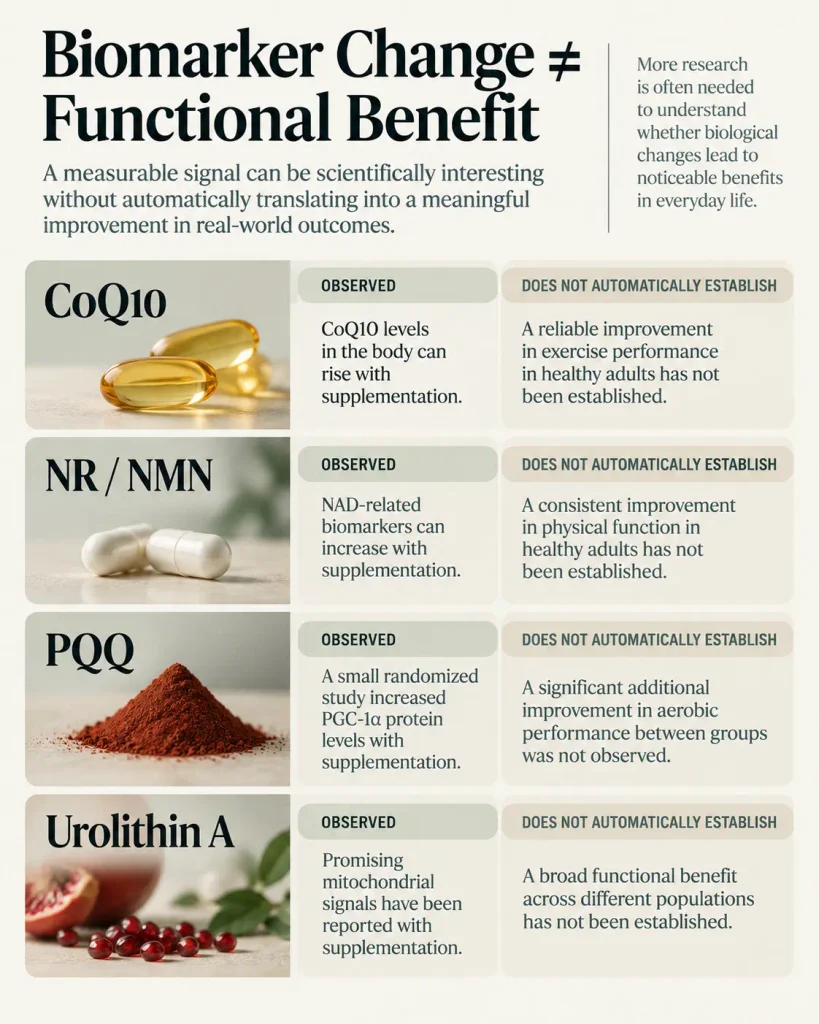
CoQ10 is one of the most intuitive ingredients in the category because its mitochondrial role is direct. It participates in electron transport, and supplementation reliably raises circulating CoQ10. That makes CoQ10 a useful target-engagement case. The problem is what happens next.
What CoQ10 Clearly Does
CoQ10 supplementation can increase measured CoQ10 levels in humans. That is a real biological effect. Its role in normal mitochondrial electron transport is also well established. If the question is whether supplemental CoQ10 reaches a measurable target, the answer is relatively strong.
What Higher CoQ10 Levels Do Not Automatically Prove
Higher circulating CoQ10 does not automatically mean better endurance, more energy, or improved physical performance. In healthy-adult research, functional performance findings remain inconsistent and less certain than the biomarker response.
Target engagement shows that the supplement changed something relevant. It does not establish the size, consistency, or practical importance of the downstream benefit. Clinical findings in heart failure or other disease settings should also not be transferred directly into a claim that a healthy adult will feel more energetic or perform better.
Safety and medication context matter too. CoQ10 may interact with warfarin and insulin and may not be compatible with some cancer treatments, which is one reason supplement decisions should not be separated from clinical context.
NR and NMN: Raising NAD-Related Biomarkers Is Not the Same as Improving Function
NAD-related supplements have become central to the mitochondrial and longevity market. The underlying biology is legitimate. NAD is involved in cellular metabolism, redox reactions, and signaling pathways relevant to energy metabolism and aging biology.
NR and NMN can affect NAD-related biomarkers in humans. That does not establish the claim that they reliably improve energy or physical function.
NR, NMN, Niacin, and Niacinamide Are Not Interchangeable
These compounds are related through NAD biology, but they are not one intervention. Nicotinamide riboside, or NR, is not the same compound as NMN. Neither should be treated as interchangeable with niacin or niacinamide. They differ in chemistry, metabolism, dosing research, safety context, and the human evidence available for each.
What Human Studies Show About NAD-Related Target Engagement
Human studies show that NR and NMN can alter NAD-related biology. That is meaningful target engagement. But physical-performance and functional outcomes are much less consistent.
Recent human evidence does not establish a reliable, general improvement in physical function across healthy or older adult populations simply because NAD-related biomarkers rise.
Why “More NAD” Does Not Automatically Mean “More Energy”
The phrase “boosts NAD” is often converted directly into “boosts cellular energy.” That leap is too large. A higher NAD-related biomarker tells you something about the biochemical system being measured. It does not automatically establish better endurance, improved mobility, increased physical capacity, less fatigue, or greater day-to-day energy. Those are separate outcomes that require their own evidence.
Urolithin A: Promising Mitochondrial Biology, Still-Emerging Human Function Evidence
Urolithin A is studied for effects related to mitochondrial quality, including mitophagy-related biology. Human randomized trials exist. That makes it more than a purely theoretical mitochondrial ingredient. But promising is not the same as established.
Why Urolithin A Is Scientifically Interesting
The biological rationale centers on mitochondrial quality-control pathways rather than merely supplying a nutrient that mitochondria use. Human studies have reported mitochondrial-related biomarker changes and some signals involving muscle endurance or function.
What the Human Trials Can and Cannot Establish
The human evidence base is still relatively small. The 2026 systematic review included five randomized controlled trials with 236 participants. Some individual findings are encouraging, including mitochondrial biomarkers and local endurance-related outcomes. But the broader pooled functional evidence remains low certainty.
The appropriate conclusion is that urolithin A is promising and has genuine human evidence. It is not yet established as a broad, reliable way to improve physical function in the general population. “Promising mitochondrial-quality biology” is defensible. “Proven mitochondrial rejuvenation” is not.
Creatine: Strong Human Performance Evidence Without a Strong Mitochondrial-Specific Claim
Creatine creates an important paradox for this category. It has stronger human functional evidence than many products explicitly sold for “mitochondrial support.” Creatine supplementation has substantial evidence in strength, muscle, and high-intensity exercise contexts.
Yet its evidence does not depend primarily on calling it a mitochondrial supplement. An ingredient can have strong, meaningful human outcomes without having the strongest mitochondrial-specific narrative. Creatine is therefore not the “best mitochondrial supplement.”
Creatine has a substantial safety evidence base in healthy adults when used within studied supplementation protocols.
Carnitine: A Necessary Mitochondrial Role Does Not Mean Everyone Benefits From More
Carnitine participates directly in transporting long-chain fatty acids into mitochondria. But healthy adults generally synthesize adequate carnitine. The fact that the body needs carnitine does not mean every healthy person benefits from supplemental carnitine.
Evidence also varies substantially by population. Findings from hemodialysis patients or specific clinical groups should not be turned into a general healthy-adult optimization claim.
Different Carnitine Forms Should Not Be Treated as One Intervention
L-carnitine, acetyl-L-carnitine, and propionyl-L-carnitine are not interchangeable evidence buckets. Different forms have been studied in different populations and for different outcomes. A positive finding for one form in one clinical setting cannot automatically be assigned to every other form.
PQQ: Molecular Signals Without Clear Additional Performance Benefit
PQQ is frequently marketed around mitochondrial biogenesis. There is enough biological interest to justify studying it. The key human question, however, is whether a molecular signal translates into something a person can actually do better.
In a small randomized study of non-endurance-trained men, PQQ supplementation during six weeks of endurance training increased PGC-1α protein levels compared with placebo, but aerobic-performance improvements did not significantly differ between groups.
That makes PQQ a useful example of the evidence ladder. A signaling change can be real and mechanistically interesting while still failing to produce a measurable additional functional advantage in that trial.
Alpha-Lipoic Acid: Mitochondrial Relevance, but Mostly Clinical-Context Evidence
Alpha-lipoic acid has legitimate mitochondrial biochemical relevance. It is involved in mitochondrial enzyme systems and is also discussed in redox and antioxidant contexts.
The limitation is not that ALA has no human evidence. It is that much of its better-known evidence comes from clinical or metabolic populations rather than healthy adults seeking mitochondrial “optimization.” Evidence in diabetic neuropathy or other clinical contexts cannot simply be relabeled as evidence that a healthy person will gain more energy, better performance, or broader mitochondrial function.
Magnesium and B Vitamins: Essential Does Not Mean More Is Better
Magnesium and B vitamins illustrate one of the most persistent supplement misunderstandings. A nutrient can be essential to energy metabolism. Deficiency can impair normal physiology. Neither fact establishes that taking more than you need creates an additional benefit.
Magnesium
Magnesium participates in hundreds of enzymatic reactions and is integral to normal ATP-related biology. If someone is magnesium deficient, correcting that deficiency can matter. But extra magnesium is not proven to improve mitochondrial function simply because the person already has adequate magnesium.
Supplemental magnesium can cause gastrointestinal effects. Kidney impairment also changes the safety context, and magnesium can interact with the absorption of some antibiotics and bisphosphonates.
B Vitamins and Niacin Context
B vitamins act as essential metabolic cofactors. That is biologically important. But the claim “B vitamins help make energy” is often transformed into “a B-complex gives you more energy.” Those are not equivalent statements.
Correcting a deficiency can restore normal function. Giving extra B vitamins to an adequately nourished person does not automatically improve endurance, energy, or mitochondrial performance.
Higher-dose niacin has its own safety issues, including flushing and potential effects involving blood pressure, glucose, and liver function. Chronic excessive supplemental vitamin B6 exposure can cause sensory neuropathy.
Other Ingredients With Weaker or Less Direct Evidence
Resveratrol
Resveratrol has been studied for signaling pathways connected to metabolism, aging, and mitochondrial biology. Human findings are mixed. Its mechanistic reputation is stronger than the evidence for a consistent functional mitochondrial benefit in general healthy adults.
Curcumin
Curcumin research often centers on inflammation, oxidative stress, soreness, or recovery-related outcomes. Those areas do not automatically establish that curcumin improves mitochondrial function.
Quercetin
Quercetin has attracted interest because of mitochondrial-biogenesis-related mechanisms. In human performance research, average effects have tended to be small or trivial. The biological story is more impressive than the practical outcome.
Omega-3
Omega-3 fatty acids have important evidence across several health contexts and may influence muscle or mitochondrial biology. But evidence for using omega-3 specifically as a mitochondrial-function supplement is secondary and inconsistent.
What About D-Ribose?
D-ribose is often marketed around ATP and cellular energy. The biochemical story is easy to understand. The evidence is not strong enough to place it in the core group evaluated here. Its role in ATP-related biology does not itself demonstrate a meaningful supplement benefit in healthy adults.
Why Evidence in Patients Does Not Automatically Apply to Healthy Adults
A supplement may work differently depending on who takes it. People with disease, metabolic impairment, a nutrient deficiency, medication exposure, or another clinical condition may have a very different baseline than a healthy adult.
Ask “Who Was Actually Studied?”
Before interpreting a positive study, look at the population: healthy adults, older adults, trained athletes, sedentary adults, or people with a specific clinical condition. Those distinctions can completely change what the result means.
CoQ10 findings in heart failure do not prove a healthy person will gain energy. ALA findings in diabetic neuropathy do not establish healthy-adult mitochondrial optimization. Carnitine findings in dialysis populations do not prove healthy adults need more carnitine. Clinical B-vitamin deficiency does not prove a B-complex is an energy booster for someone who is already replete.
Deficiency Correction and “Optimization” Are Different Questions
Nutrient deficiency can impair normal physiology. Correcting a deficiency can therefore produce a meaningful benefit. That is not the same scientific question as asking whether giving extra nutrients to someone who already has enough will push mitochondrial function beyond normal.
Symptoms such as fatigue are nonspecific; if your concern is specifically feeling tired after eating, that pattern has its own possible explanations and should not be converted into a mitochondrial diagnosis.
This article cannot answer an individual’s deficiency status from symptoms, fatigue, stamina, or exercise tolerance. Those are nonspecific experiences and should not be used as a self-diagnosis pathway.
More Ingredients Do Not Mean More Evidence
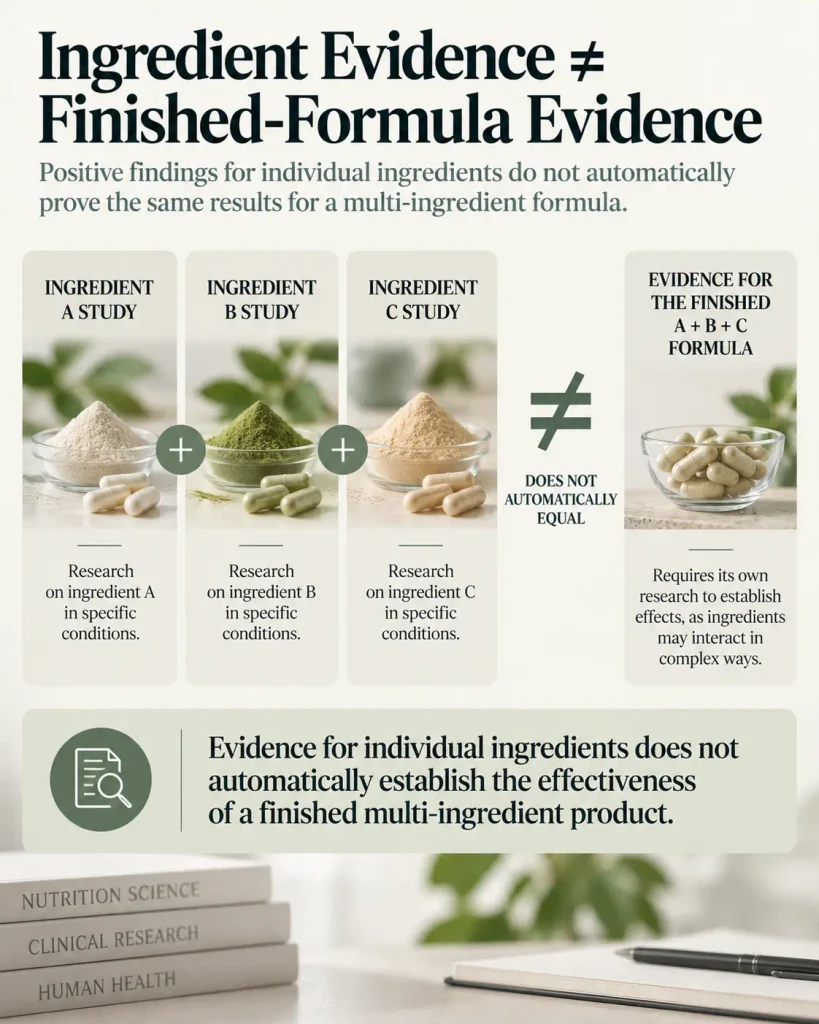
A formula with ten mitochondrial-sounding ingredients may look more comprehensive than a formula with one or two. Scientifically, that conclusion does not follow.
Evidence for ingredient A plus evidence for ingredient B does not automatically establish evidence for formula A+B. Ingredients can differ in dose, formulation, absorption, interactions, population studied, and outcome tested.
A finished multi-ingredient formula should therefore be judged on evidence for that finished formula when available. Readers who want the exact-product investigation can continue to our Advanced Mitochondrial Formula review, which owns the formula-specific decision rather than this generic evidence comparison.
This matters especially in the mitochondrial category because many ingredients have mechanistic evidence that is already one or two steps removed from a functional outcome. Stacking several mechanisms does not turn them into a proven human benefit.

How Supplements Compare With Exercise as a Mitochondrial Stimulus
Exercise is a useful calibration point because human mitochondrial adaptation to training has been studied much more directly than most supplement claims. Repeated aerobic and endurance exercise can produce measurable mitochondrial adaptations in human skeletal muscle as part of the broader training response.
If your goal is practical conditioning rather than supplement comparison, see our guide to increasing stamina and endurance.
For a running-specific implementation of that training question, see how to increase stamina for running.
Exercise and supplements should not be treated as interchangeable interventions. Exercise shows what stronger evidence can look like when researchers connect a real-world intervention with direct human physiological adaptation and functional performance. A supplement that changes one mitochondrial biomarker should not automatically be described as producing the same kind of adaptation as repeated training.
When endurance itself is the reader’s target, the practical question is better handled through broader endurance training principles than by assuming a mitochondrial supplement is the missing variable.
Who Should Be More Careful With Mitochondrial-Support Supplements?
“Mitochondrial support” is a marketing category, not one uniform intervention. Safety depends on the actual ingredient, dose, medication context, medical history, and duration of use.
- CoQ10: warfarin, insulin, and some oncology contexts can matter.
- Creatine: has a substantial safety evidence base in healthy adults when used within studied supplementation protocols, but individual clinical circumstances still matter.
- Carnitine: may cause gastrointestinal effects; seizure-disorder and uremia-related context may be relevant.
- Alpha-lipoic acid: may matter in people using glucose-lowering therapies.
- Magnesium: supplemental forms can cause GI effects, kidney impairment changes the safety context, and absorption interactions can occur with some antibiotics and bisphosphonates.
- NR and NMN: short-term human target-engagement data are stronger than long-term certainty across broad populations.
- Niacin: higher doses can cause flushing and may affect blood pressure, glucose, and liver function.
- Vitamin B6: chronic excessive supplemental exposure can cause sensory neuropathy.
- Urolithin A and PQQ: long-term safety databases are smaller than those for some more established supplements.
Medication and Clinical Context Matter
People who take prescription medications, have kidney disease, have significant chronic illness, receive cancer treatment, use glucose-lowering drugs, or have other relevant medical conditions should not make supplement decisions based only on a generic “mitochondrial support” label. The biologically interesting ingredient is not always the clinically appropriate ingredient.
So Which Supplements Have the Strongest Case?
There is no single winner because the answer changes depending on what kind of evidence you value. That is more useful than forcing everything into one ranking.
Strongest Biochemical / Mechanistic Relevance
CoQ10, carnitine, magnesium, and B vitamins all have clear roles in normal metabolism or mitochondrial-related physiology. But biological necessity is not the same thing as evidence that extra supplementation improves function in replete healthy adults.
Strongest Human Target Engagement
CoQ10 clearly raises circulating CoQ10. NR and NMN can alter NAD-related biomarkers. These are relatively strong examples of target engagement. The limitation is what happens downstream: target engagement is more consistent than functional improvement.
Most Interesting Direct Mitochondrial Human Evidence
Urolithin A stands out because its human research includes mitochondrial-quality-related signals rather than only a general nutrient-role argument. That makes it scientifically interesting. But the human functional evidence remains relatively small and low certainty overall.
Strongest Functional Human Evidence
Creatine has one of the strongest cases for meaningful human functional outcomes in this broader group, especially in muscle, strength, and high-intensity exercise contexts. That does not make creatine the “best mitochondrial supplement.”
Most Promising but Still Emerging
Urolithin A fits this category best. The biology is compelling, human trials exist, and some signals are encouraging. The appropriate conclusion is still “promising,” not “established.” NR and NMN are also important emerging examples, but their target engagement currently exceeds the consistency of their functional outcomes.
How to Evaluate a “Mitochondrial Support” Supplement
Instead of asking which label sounds most advanced, ask a sequence of evidence questions.
1. What exactly is the claim? Is the supplement claiming to raise a biomarker, affect a pathway, improve mitochondrial measurements, or improve real-world function? Those are different claims.
2. Was the evidence in humans? Cell and animal studies can establish plausibility. They cannot establish a human functional benefit by themselves.
3. Who was studied? Evidence in people with a disease, deficiency, or clinical condition may not apply to healthy adults.
4. Did the study measure an outcome that matters? A changed blood marker is not the same as better exercise performance. A signaling molecule is not the same as improved mobility.
5. Was the exact ingredient form studied? Different forms of carnitine, niacin-related compounds, and other ingredients should not be treated as interchangeable.
6. Was the finished formula studied? A blend does not inherit proof simply because individual ingredients have separate studies.
7. Is the benefit consistent enough to matter? One favorable signal does not automatically create a reliable effect.
8. What are the safety and interaction issues? A supplement that affects meaningful biology can also have context-dependent risks.
For the assigned product specifically, use the Advanced Mitochondrial Formula review once you want formula-level ingredients, claims, cost, and buying-decision analysis.
The strongest mitochondrial supplement claims are the ones that survive all of those questions without turning a mechanistic result into a functional promise.
Frequently Asked Questions About Supplements for Mitochondrial Function
Is there one best supplement for mitochondrial function?
No. There is no universal scientifically defensible winner because different supplements lead on different evidence targets. CoQ10 has strong target engagement, NR and NMN alter NAD-related biology, urolithin A has emerging mitochondrial-quality evidence, and creatine has strong functional human evidence without being primarily validated as a mitochondrial-specific supplement.
What does mitochondrial function actually mean?
It can refer to several levels of biology, including biochemical roles, signaling pathways, biomarkers, direct mitochondrial measurements, and functional outcomes. Those levels should not be treated as interchangeable. A biomarker change may be real without proving a noticeable improvement in physical function.
What does human CoQ10 research actually show?
CoQ10 supplementation reliably raises circulating CoQ10 and has a direct biological role in mitochondrial electron transport. In healthy adults, however, exercise-performance effects appear small, inconsistent, and context-dependent, with low overall certainty. Higher CoQ10 levels do not automatically establish a meaningful functional benefit.
Do NAD+ supplements like NR or NMN improve energy or physical function?
NR and NMN can change NAD-related biomarkers in humans, so target engagement is real. But increases in NAD-related markers do not by themselves establish consistent improvements in physical function or endurance across the general population.
Does urolithin A improve mitochondrial function?
Urolithin A has promising biology and human randomized trials involving mitochondrial-related outcomes. Some individual findings are encouraging, but the broader functional evidence remains relatively small and low certainty. It is more accurate to call the evidence emerging than established.
Is creatine a mitochondrial supplement?
Creatine is better supported as a performance, strength, and muscle-related supplement than as a specifically mitochondrial supplement. Its strong human functional evidence is useful precisely because it shows that a supplement can produce meaningful outcomes without needing a mitochondrial-specific identity.
Are multi-ingredient mitochondrial formulas better than single ingredients?
Not automatically. More ingredients do not equal more evidence. A finished multi-ingredient formula should be judged on evidence for that finished formula when available, rather than assuming that separate studies of individual ingredients prove the combination works.